Sunday, March 6, 2011

3.2.1 Summary

Three things I learned:

1.) There are different forms of imperialism including economic imperialism and protectorates.

2.) The differences between Old Imperialism and New Imperialism.

3.) Details of current uprisings such as in Libya and Sudan.

Two things that interested me:

1.) China and Japan were very resistant to the western world. I would think that all the technologies the West had that the East didn't would have enticed them to trade.

2.) Ethiopia was the only African nation that managed to not get taken over by a European country.

One question I still have:

1.) What was going on in South America at this time?


Suez Canal

The Suez Canal is an artificial sea-level waterway running north to south across the Isthmus of Suez in Egypt to connect the Mediterranean Sea and the Red Sea. The canal separates the African continent from Asia, and it provides the shortest maritime route between Europe and the lands lying around the Indian and western Pacific oceans. It is one of the world's most heavily used shipping lanes. The Suez Canal is the shortest route between East and West as compared with the Cape of Good Hope. The canal is owned and maintained by the Suez Canal Authority (SCA) of the Arab Republic of Egypt. Under international treaty, it may be used "in time of war as in time of peace, by every vessel of commerce or of war, without distinction of flag."


http://www.suezcanal.gov.eg/

Saturday, March 5, 2011

Current Uprising: Kuwait

Currently, longtime residents of Kuwait who are not Kuwaiti citizens are seeking greater rights. Many of Kuwait's stateless residents are descendents of desert nomads denied citizenship under strict nationality laws in the small Gulf state. In Kuwait, citizenship entitles holders to generous welfare benefits. The stateless Arabs are also demanding in addition to citizenship, free education, healthcare, jobs, and benefits available to Kuwaiti nationals. Protesters have clashed with authorities on at least two occasions, including February 19, when 200 to 400 demonstrators attacked security forces and were dispersed using tear gas. As of yet, the only effects these protests have had are increased oil prices.

Uprising in a European Colony

On of the most well known uprisings of the British colonization era was the Indian Rebellion of 1857, also known as the "Sepoy Mutiny." Britain had gained control over two-thirds of India's land and imperialism affected every part of Indian life. As a result, there was tension that only needed a small spark to set off a violent revolt. This spark came in the form of the new Enfield rifles. Loading one of these rifles included biting a cartridge which was greased in pig or cow fat - the first an animal held unclean by the Muslims, and the second a sacred animal to the Hindus. Muslim and Hindu troops were equally insulted. Violence began in Meerut and soon erupted into other mutinies and civilian rebellions in central India. The mutiny was broken by the British within six months, but the effects had been felt, as this was only the first step toward's India's independence from colonialism.

Friday, March 4, 2011

US Event: Annexation of Hawaii

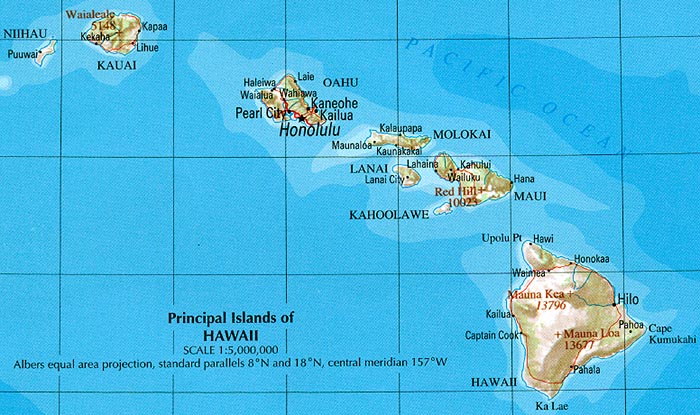
America's annexation of Hawaii in 1898 extended U.S. territory into the Pacific. For most of the 1800s, the United States was concerned that Hawaii might become part of a European nation's empire. During the 1830s, Britain and France forced Hawaii into giving them economic privileges. In 1842, Secretary of State Daniel Webster sent a letter to Hawaiian agents in Washington stating that the United States had an interest in securing exclusive trading privileges with Hawaii. He also proposed cutting off any further colonization by any other country. In 1849, the United States and Hawaii concluded a treaty that began years of peaceful relations between the countries.


Hawaii became a key part of the United States' economy, as it was a perfect spot to harbor whaling ships and was a new source of sugarcane production. An 1875 trade treaty brought the countries even closer together by allowing plantation owners from the United States to dominate the politics and economy of Hawaii. When Queen Liliuokalani moved to strengthen the monarchy, Americans under the leadership of Sanford Dole expelled her in 1893. President Benjamin Harrison encouraged the takeover, and sent sailors from the USS Boston to Hawaii. The U.S. ambassador to Hawaii, John L. Stevens, worked closely with the new government. In 1894, President Cleveland, who opposed annexation, sought to restore the queen. Dole, who sought annexation, was disappointed, but declared Hawaii an independent republic. Nevertheless, spurred by the nationalism brought about by the Spanish-American War and the urging of President William McKinley, the United States annexed Hawaii in 1898. Dole became the governor of Hawaii when it was made a territory in 1900. Hawaii would become a state in 1959.

The United States treatment of Hawaii is similar to the Britain's treatment of India. Both territories were ruled by their mother countries under a form of economic imperialism. Also, both territories experienced drastic political changes while they were being controlled.

US Event: Philippine-American War

The Philippine-American War, which is also known as the Philippine War of Independence, was an armed conflict beginning and 1899 and continuing until 1902 between a group of Filipino revolutionaries and the United Sates of America. The war arose following a struggle by the First Philippine Republic, a short-lived insurgency revolutionary government created following the Philippine Revolution against Spanish rule, to gain independence following annexation by the United States. Fighting began on February 4, 1899 and quickly escalated into the Battle of Manila. The painting above depicts this battle, which ended in an American victory. The War officially ended in July 1902 with the passing of the Philippine Organic Act, which established a bicameral legislature and extended the United States Bill of Rights to Filipinos. Opposition to the war inspired Mark Twain to found the Anti-Imperialist League and British poet Rudyard Kipling to write "The White Man's Burden." 

The war and occupation by the United States would change the cultural landscape of the islands, as the people dealt with a large death toll, disestablishment of the Catholic Church as the state religion, and the introduction of the English language as the primary language of government and some businesses. In 1916, the United States granted the Philippines autonomy and finally allowed self-government in 1934. In 1946, the Philippines became an independent state.

This instance of American Imperialism was very similar to European imperialism in that the government used force to effect the politics and culture of a foreign country. Additionally, there was resistance to foreign control in the same way that Japan and China fought to keep out the western world.

United States Imperialism

Is the United States or has the United States ever been imperialistic?

Yes...

1.) The United States controlled the Philippines following the Treaty of Paris in 1898. The Philippine-American War that followed is also evidence of American imperialism. The Philippines became a colony in the fashion of Europe's New Imperialism.

2.) Intervention in Iraq is arguably imperialistic and the way we have fought for democracy in the middle east is borderline ethnocentric.

3.) The United States government's treatment of the Native American population was very racist and designed to remold them into a people more appropriately conformed to imperial desires.

No...

1.) Following the earthquakes in Haiti, America chose to not fly the flag at the Port-au-Prince Airport. In the words of President Obama, "we are not here as an occupation force, but as an international partner committed to supporting the government of Haiti on the road to recovery."
http://www.usatoday.com/news/world/2010-03-14-haiti-flag-flap_N.htm

2.) America is a part of the United Nations.

3.) American occupation of a territory, for example Japan, is only for a short period of time and for the benefit of the occupied country.